Sluggish markets on Good Friday
Global markets stayed quiet early Friday due to the Good Friday holiday, with only China and Japan open. Sentiment remained weak as tensions around Iran, a hawkish Federal Reserve (Fed) stance due to inflation fears, and mostly strong U.S. data weighed on optimism. Traders are cautious because the U.S. monthly employment report is being released unusually today despite closed equity and bond markets, and such events have historically caused big price gaps on the next trading day.
On Thursday, Donald Trump posted on Truth Social that Iran’s biggest bridge had been destroyed and warned Iran to make a deal before it is too late. Earlier, Masoud Pezeshkian said Iran does not want to expand the conflict, even after Iran claimed drone attacks on US fighter jets at Al Azraq base in Jordan. Iran also mentioned possible responses against the US and Israel, including targeting scientific and technological centers, especially in Dubai, and counterattacks on Israeli facilities, showing ongoing escalation.
Meanwhile, Iran reportedly drafted a protocol with Oman to manage traffic in the Strait of Hormuz, according to the Islamic Republic News Agency. Iran’s Deputy Foreign Minister for Legal and International Affairs confirmed it but described it as routine monitoring rather than a peace move.
In the U.S., political uncertainty increased as Trump is reported to have removed the Attorney General (Atty. Gen.) Pam Bondi. Reports suggest Lee Zeldin is a possible replacement, while Todd Blanche may act as interim Atty. Gen. The move is linked to dissatisfaction over the handling of the Jeffrey Epstein case files.
In commodities, oil markets showed strong buying in near-term futures but weaker momentum further out, with December West Texas Intermediate (WTI) crude only slightly higher. Stocks initially fell sharply but recovered as investors focused on longer-term oil stability and expectations of a Trade Always Comes Out (TACO) style outcome in an unpopular war. The S&P 500 ended slightly higher after a large pre-market drop, supported by dip-buying and short covering before the long weekend.
Concerns are rising that emerging markets (EMs) could face shortages, leading to economic stress. In fixed income, bonds gained, and yields fell, suggesting either a flight to safety or expectations that the Fed may not need to raise rates further.
Recent U.S. data showed initial jobless claims at 202K versus 212K expected, with the prior week revised to 211K. The 4-week moving average dropped to 207.75K. Continuing claims came at 1.841M versus 1.839M expected, with a 4-week average of 1.839M. The February trade balance showed a deficit of -57.30 billion versus -61.00 billion expected. The goods deficit rose by 2.5 billion to 84.6 billion, while the services surplus fell slightly to 27.3 billion. Year-to-date, the total deficit dropped by 136.1 billion or 54.8 percent, with exports up 62.6 billion (11.3 percent) and imports down 73.5 billion (9.2 percent).
John Williams, President of the New York Fed, said monetary policy is well-positioned, but risks have increased both ways, describing the economy as low hire and low fire with modest hiring ahead. Lorie Logan, President of the Dallas Fed, said she was not convinced inflation was easing enough even before the war, but policy remains flexible to adjust based on data.
That said, Fed expectations remain steady, with about a 30 percent chance of a rate cut in December, though upcoming non-farm payrolls (NFP) data could change this, while the Iran situation remains the bigger driver.
China’s services sector also expanded but slowed, with the RatingDog China General Services PMI at 52.1 from 56.7, marking continued growth for over three years, supported mainly by domestic demand.
Overall, the U.S. Dollar Index (DXY) moves slightly higher while still holding its weekly loss, which puts pressure on gold buyers aiming for their first weekly gain in five weeks. At the same time, other major currency pairs move lower, while crude oil prices stay steady after recording their biggest one-day rise in a month previously. Meanwhile, stocks in Japan move up, and Chinese stocks fall, following the mixed trend seen on Wall Street, and cryptocurrencies continue to stay under pressure.
EURUSD, GBPUSD drift lower, USDJPY edges higher
The U.S. Dollar Index (DXY) shows a mild recovery amid the holiday mood, mostly upbeat U.S. data, and hawkish bias, which in turn keeps EURUSD and GBPUSD continuing their previous day’s losses, though without strong momentum. At the same time, USDJPY also records small gains even though Japan’s data is not weak.
Japan’s services sector eased slightly, with the S&P Global Japan Services PMI at 53.4 compared to 53.8 earlier, still indicating steady growth for 12 consecutive months, mainly supported by the finance and insurance sectors.
AUDUSD, NZDUSD remain weak, USDCAD defends recovery
AUDUSD and NZDUSD stay under pressure, while USDCAD keeps the previous day’s rebound, as weaker China PMI (Purchasing Managers’ Index) data, overall market pessimism, and a stronger USD (U.S. Dollar) weigh on sentiment. Concerns about a prolonged energy crisis also add pressure on these Antipodean currencies. Despite strong crude oil prices, which are important for Canada’s exports, USDCAD moves higher, mainly influenced by weak Canadian trade data.
Meanwhile, Canada reported a February trade deficit of -5.74B compared to -2.25B expected.
Crude Oil bulls remain hopeful, gold consolidates gains
On Thursday, WTI (West Texas Intermediate) Crude Oil recorded its biggest daily gain in a month as fears of a prolonged Iran war increased.
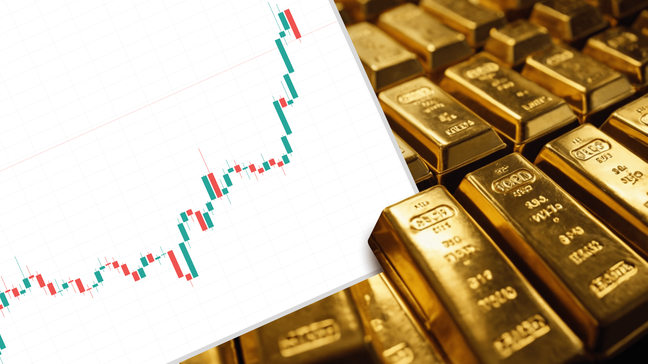
At the same time, gold prices turned softer after ending a four-day winning streak, but remain on track for their first weekly gain in five weeks, as traders continue to look for safety amid market uncertainty, although a stronger USD (U.S. Dollar) is limiting further upside.
Cryptocurrencies stay downbeat, equities trade mixed
Bitcoin (BTC) and Ethereum (ETH) show mild intraday losses without strong momentum, as a stronger USD (U.S. Dollar) and overall risk-off market mood weigh on sentiment. At the same time, Asia-Pacific equities move lower, while Wall Street indices remain mixed.
In equities, after volatility triggered by comments from Donald Trump, the final performance shows the S&P 500 up 0.11% at 6582.68, the NASDAQ Composite up 0.18% at 21879.18, and the Dow Jones Industrial Average down -0.13% at 46504.60. For the shortened week, the Dow gained 2.96%, the S&P 500 rose 3.36%, and the NASDAQ climbed 4.44%, marking the best weekly performance since November 24, 2025.
Tesla reported first-quarter deliveries of 358,023 compared to 372,000 expected. Model 3/Y deliveries were 342K versus 354K expected, while production reached 394K compared to 377K expected. The stock fell about 2% before the release and extended losses to around 3.5% after.
Latest moves of key assets
- WTI crude oil jumped the most in a month while closing around $112.00 on Thursday.
- Gold snapped a four-day winning streak while paring the first weekly gains in five weeks near $4,676.
- The US Dollar Index (DXY) keeps Thursday’s rebound near 100.00, despite lacking momentum.
- Wall Street closed mixed, and so did the Asia-Pacific stocks. Meanwhile, equities in Europe and the UK are off for Good Friday.
- Bitcoin (BTC) and Ethereum (ETH) both remain mildly offered while falling to $66,600 and $2,050, respectively.
A dull day ahead…
Even with major markets on a long weekend for Good Friday, key releases like the U.S. NFP (Non-Farm Payrolls) and S&P Global PMI for March can still spark activity for Forex (FX) and cryptocurrency traders, while U.S. equities and bond markets remain closed. Headlines around the Iran war and the Strait of Hormuz will continue to influence market direction.
With a stronger USD (U.S. Dollar), a hawkish Fed (Federal Reserve), and expectations of stronger U.S. employment data, major currencies and cryptocurrencies may stay under pressure. Gold’s pullback from technical resistance may attract sellers if the USD remains firm, while crude oil buyers could maintain control.
Trading this report is unusual because it falls on Good Friday. Many see the data as less impactful since the war dominates sentiment, and even a weak outcome might not shake confidence due to strong recent ADP (Automatic Data Processing) reports. However, this assumption has limits.
Historically, NFP releases on Good Friday in 1994 and 1996 came much stronger than expected, and with markets closed, they triggered sharp bond market selloffs the following Monday.
Overall, major moves are unlikely given low liquidity, but thin trading can still cause sudden price spikes, so caution is advised.
Predictions for top-tier assets
- Bullish Move Expected: Gold, Silver
- Further Downside Likely: USDCHF, BTCUSD, ETHUSD, USDJPY
- Sideways Movement Anticipated: USDCAD, Nasdaq, DJI30, USDCNH, AUDUSD, NZDUSD, US Dollar
- Slow & Gradual Fall Eyed: DAX, FTSE 100, EURUSD, Crude Oil, GBPUSD
May the trading luck be with you!